The 3 Core Elements of Successful Immersive Brand Communication
6. März 2024
JUST A GIMMICK OR REAL BUSINESS IMPACT?
Source: Horizont.net, March 6, 2024
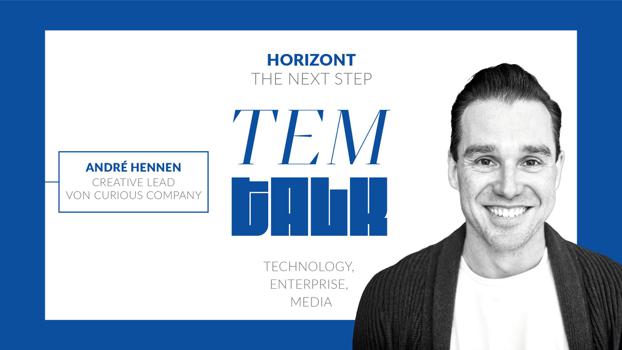
Immersive storytelling is the next evolutionary step in brand communication – and has nothing to do with metaverse or VR gimmicks. André Hennen, Creative Director at Curious Company, is convinced of this. In his TEM Talk, he explains the differences between linear and immersive communication.
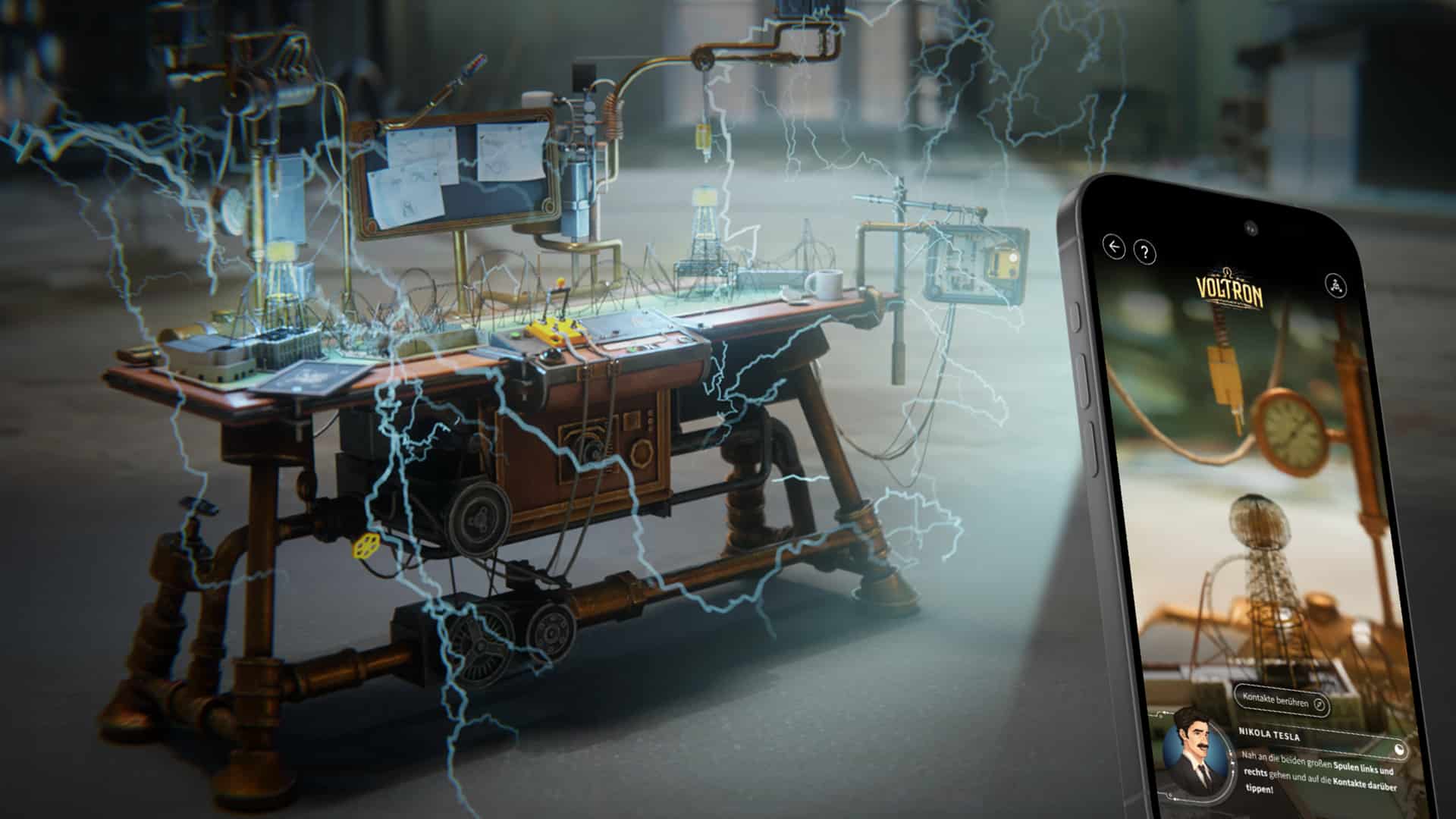
Linear communication sends a message at our heads – immersive communication lives inside our heads. Whereas in the past communication was only broadcast frontally (films, ads, posters, etc.), immersive communication actively involves people and gives them real agency – in every medium. In schools, frontal teaching is rightly considered outdated – yet in brand communication, we still communicate far too often in a linear way.
Through immersive storytelling, we become participants in brand communication. Not as an abstract „target group,“ but as individuals – with a personal and therefore hyper-personalized experience. We immerse ourselves in the brand experience and influence what happens. This creates entirely new dimensions of emotion, brand recall, and brand loyalty – even love brands. And since people who participate interactively can easily be asked for their opinions, the entire communication process can be sustainably developed further. The old „We’ll make a big image film and hope for the best“ becomes a measurable and expandable experience that people use and share voluntarily.
The exciting question is: how does it work? A common misconception is that immersion equals VR, AR, or the metaverse. But immersion is a feeling. To create it, we need three core elements: a relevant business strategy, an emotional story, and the right technology. In this cycle of „Business, Story, and Tech,“ everything builds on each other equally.
1. Immersive Business (Impact)
For immersive communication to work sustainably, it must be convincing economically, emotionally, and technologically. Otherwise, it’s just a campaign that disappears after a few weeks.
True immersion doesn’t just happen within a single story or asset but considers the entire environment of a brand. Regardless of where and when someone comes into contact with it, the person experiences the same story in an interactive version. To make this work, brands and their agencies must understand the environment – the funnel – in detail. We must know where and when people have certain needs. For example, hardly anyone wants to engage with a long VR experience while shopping. The most important questions at every touchpoint are therefore: How do users enter? How do they exit? (And what did they experience or learn?)
The goal is a strategy that is entertaining or educational – and aligned with business objectives. When all assets and touchpoints are interconnected, the experience is passed along like a relay baton – all the way to the finish line. Since the audience is an active part of the communication, we can measure, adjust, and continuously evolve everything.
2. Immersive Storytelling
The biggest difference between immersive and classical storytelling is that we assign our users a real role and give them two important things, as if they were characters in a novel: orientation and motivation. Where are they, and where are they going? Based on this, we define our toolbox for the future story: the plot (what’s it about?), the characters (including the user), motivation (goal), timing, setting (design), and integration into the funnel.
There are many metaverse experiences that fail to answer this question. Users wander through a 3D world without knowing who they are or what their goal is. That’s not immersion – it’s boring after two minutes.
3. Immersive Technology
Internally, we have a saying: „If technology is your idea, you don’t have an idea.“ So we first define strategy (business relevance) and story – and only then select the right technology. This approach also protects us from „hype hammers“: a current hype technology is like a hammer that suddenly makes everything look like a nail. It’s crucial to understand new technologies beyond PowerPoint – and to align them with strategy and story. Is it really the perfect match?
Only then can „digital sustainability“ of assets be ensured. That’s another key point: digital experiences are still too often conceived too narrowly and used like posters or ads for a short time. Yet, with the right technology, they offer the opportunity to be developed further for years and integrated ever more seamlessly into the funnel.
It’s also important to have substantial knowledge of analog and tactile media. Too often, traditional touchpoints like physical stores or print are seen as relics of the past. Yet these touchpoints are used and loved by millions every day. There’s still enormous potential here – including for digitalization.
The Integration of Business, Story, and Tech for Truly Immersive Brand Communication
The more equally business, story, and tech are treated, the more immersive the communication becomes. Most companies and agencies have one area of focus when designing brand communication, are capable in a second, and outsource the third to external partners. This almost inevitably means that the areas aren’t treated equally. At the very least, the leads from each area should work under one roof or be in very close exchange – ideally, this applies to all operational disciplines.
Conclusion
We all want to be treated as people, not as an anonymous mass of target groups. Immersive brand communication does exactly that: reaching people personally – and actively involving them! Hyper-personalized, measurable marketing – wrapped in emotional stories and experiences. Technologically optimized and integrated into the relevant funnel.
This not only leads to substantially measurable results that can be sustainably developed further, but it’s also more enjoyable for everyone involved. And so, immersive brand communication is no longer just a gimmick, but creates real impact.
Next News